The Great Retinol Debate: Why Pairing Retinol with Bakuchiol is the Smart Way Forward
Pol SitjasWhat Is the Retinol Debate — and Why Does It Matter for Your Skin?
Retinol is widely regarded as the gold standard of anti-aging skincare, yet it remains one of the most abandoned ingredients in any routine. The retinol debate is not about whether it works — decades of peer-reviewed research confirm that it does — but about whether most people's skin can tolerate it well enough to see those results.
For every person who swears by retinol, there is another who gave up after weeks of peeling, redness, and the dreaded "retinol purge." This article addresses that fear directly — and makes the case that the answer is not to choose between retinol and gentler alternatives, but to combine the two most intelligently.
The Science Behind Retinol: What It Does and Why It's Hard to Tolerate
How Retinol Works in the Skin
Retinol is a vitamin A derivative that converts within the skin to retinoic acid — the biologically active form that binds to nuclear receptors in keratinocytes and fibroblasts. Once bound, it upregulates gene expression for collagen synthesis, accelerates cellular turnover, and reduces the activity of enzymes (matrix metalloproteinases, or MMPs) that break down the extracellular matrix (ECM).
In practical terms: retinol makes skin produce more collagen, shed dead skin cells faster, and resist structural degradation more effectively. For visible skin solutions, no single ingredient has a stronger evidence base.
Why Retinol Causes Irritation, Peeling, and Purging
Retinol's mechanism is also the reason it causes problems. The accelerated cellular turnover it triggers happens faster than the skin barrier can adapt — particularly in the first 4–8 weeks of use. The result is what many people call the "retinol purge": a period of flaking, redness, increased sensitivity, and sometimes breakouts as congested pores are rapidly cleared and the skin barrier is temporarily disrupted.
For sensitive skin types, compromised skin barriers (common in dry and mature skin), or anyone living in cold or low-humidity environments like the Netherlands, this adaptation period can be genuinely difficult. The conventional advice of "start low and go slow" helps, but does not eliminate the problem. The real question is: is there something that could make retinol more tolerable without reducing its efficacy? This is exactly where bakuchiol enters the conversation.
What Is Bakuchiol — and Is It Really a Retinol Alternative?
Bakuchiol is a plant-derived meroterpene extracted from the seeds and leaves of Psoralea corylifolia, a plant used in Ayurvedic medicine for centuries. Bakuchiol has been shown in peer-reviewed clinical trials to produce collagen-stimulating and cellular renewal effects comparable to retinol — with significantly lower rates of irritation, stinging, and scaling.
The key distinction is that bakuchiol is not a vitamin A derivative and does not convert to retinoic acid. Instead, it produces retinol-like effects through a functionally parallel but structurally different mechanism — activating retinol-response elements on fibroblasts and upregulating collagen type I, III, and IV synthesis without directly binding to the same nuclear receptors that cause retinol's irritation cascade.
This makes bakuchiol both a genuine retinol alternative for sensitive skin and, crucially, a complementary ingredient that works alongside retinol rather than simply replacing it.
Bakuchiol vs. Retinol: The Key Differences
Mechanism and Skin Behaviour
Both retinol and bakuchiol stimulate collagen synthesis and accelerate cellular turnover. Where they differ is in how they get there and what side effects accompany the journey.
Retinol works via nuclear receptor binding, triggering a gene expression cascade that is powerful but inherently inflammatory in the early weeks of use. Bakuchiol works through a parallel pathway — activating similar downstream effects on fibroblasts via different receptor interactions — without the same level of barrier disruption. Bakuchiol also carries antioxidant and anti-inflammatory properties that retinol lacks, which is why the combination produces net lower irritation than retinol used alone.
For the bakuchiol vs retinol Netherlands audience — where year-round cooler temperatures and lower humidity already stress the skin barrier — this difference in tolerability is practically significant.
What Bakuchiol Can and Cannot Do
Bakuchiol is a strong standalone skin solution for:
- Collagen I, III, and IV synthesis stimulation
- Reduction in hyperpigmentation via tyrosinase inhibition
- Anti-inflammatory support during cellular renewal
- Antioxidant protection at the epidermal level
- Safe use during pregnancy (unlike retinol)
Where retinol retains an edge:
- Depth of nuclear receptor activation (retinol's mechanism is more directly understood)
- Decades of clinical evidence at specific concentrations
- Speed of visible cellular turnover acceleration at established doses
The conclusion is not that one is superior — it is that they address the same goal through complementary pathways, making them more powerful together than either is alone.
Comparison: Retinol Alone vs. Bakuchiol + Retinol
|
Parameter |
Retinol Alone |
Bakuchiol + Retinol |
|---|---|---|
|
Collagen stimulation |
High |
High (synergistic dual-pathway) |
|
Initial irritation risk |
Moderate–High |
Low–Moderate |
|
Retinol purge severity |
Moderate–High |
Significantly reduced |
|
Barrier disruption |
Yes (weeks 1–8) |
Buffered by bakuchiol's anti-inflammatory action |
|
Anti-inflammatory support |
None |
Yes — via NFkB inhibition (bakuchiol) |
|
Photostability |
Unstable (evening use only) |
Bakuchiol stable for AM; retinol evening only |
|
Suitable for sensitive skin |
With difficulty |
Yes — with phased introduction |
|
Safe in pregnancy |
No |
Bakuchiol component is safe; retinol component is not |
|
Advanced skin renewal speed |
Faster initially |
Comparable at 12 weeks; better sustained tolerance |
The Smart Pairing: How Bakuchiol Stabilises and Enhances Retinol
Why the Combination Works Better Than Retinol Alone
When bakuchiol is paired with retinol, two things happen simultaneously that do not occur when retinol is used alone:
- Bakuchiol's anti-inflammatory action buffers the retinol purge. The peeling, redness, and sensitivity that characterise retinol's early weeks are an inflammatory response. Bakuchiol's documented anti-inflammatory properties — including inhibition of NFkB-mediated inflammation — directly reduce this response, making the adaptation period shorter and more comfortable.
- Bakuchiol enhances the net collagen signal. Because bakuchiol activates retinol-response elements through its own receptor pathway while retinol activates via nuclear receptors, using both together produces a broader activation of the collagen synthesis cascade. Studies show improved tolerability and comparable or superior outcomes for fine line reduction and skin texture.
This is why a well-formulated advanced skin renewal serum combining both ingredients is more than a marketing claim — it reflects genuinely synergistic biology.
How to Prevent Retinol Peeling When Introducing the Pair
If you have avoided retinol due to past irritation, or are new to retinol entirely, the following phased approach dramatically reduces the risk of the retinol purge:
- Phase 1: Weeks 1–2 — Bakuchiol only — Allow bakuchiol to begin upregulating collagen pathways and reduce baseline skin inflammation before introducing retinol. The skin barrier is being primed for renewal without the irritation risk.
- Phase 2: Weeks 3–4 — Bakuchiol + low-dose retinol (0.025%) — Introduce retinol at the lowest effective concentration, always layered over bakuchiol serum. The bakuchiol present buffers the initial inflammatory response.
- Phase 3: Week 5 onward — Maintain or increase retinol gradually — The skin is now adapted. Retinol concentration can be increased toward 0.05%–0.1% depending on tolerance. Bakuchiol remains as a continuous anti-inflammatory stabiliser and collagen co-activator.
Retinol for Sensitive Skin: Rethinking Who Can and Cannot Use It
The Sensitive Skin Barrier Problem
Sensitive skin is not simply reactive skin — it is usually skin with a structurally compromised barrier (reduced ceramide levels, elevated TEWL, heightened neural sensitivity in the epidermis). When retinol is applied to this environment, it disrupts an already fragile barrier, triggering disproportionate inflammation and causing many people to permanently label themselves "retinol intolerant."
The truth is that most of these individuals are not retinol intolerant — they used retinol in a barrier environment that could not support it. Bakuchiol as a retinol alternative for sensitive skin is not a permanent substitute: it is the bridge that repairs and stabilises the barrier enough to eventually tolerate retinol alongside it.
Who Should Use Bakuchiol as a Standalone Skin Solution
There are cases where bakuchiol alone is genuinely the right skin solution rather than a stepping stone:
- Pregnancy and breastfeeding — Retinol is contraindicated; bakuchiol is the only evidence-based collagen-stimulating alternative
- Rosacea or eczema-prone skin — Where even low-dose retinol may trigger flares, bakuchiol delivers renewal benefits without the inflammatory risk
- Severely compromised barriers — Until the skin barrier is sufficiently restored (typically 8–12 weeks), retinol should be deferred
- Those who have tried retinol multiple times with sustained irritation — A full course of bakuchiol followed by a gradual re-introduction may be more appropriate than another immediate retry
Building Your Advanced Skin Renewal Routine with Retinol and Bakuchiol
The most effective advanced skin renewal serum routine combining these two ingredients follows a layering logic: prepare the skin, apply actives in the correct order, and seal in the work.
Evening Routine (Where the Work Happens)
Step 1:
Gentle cleanse: Cream or oil cleanser preserving pH 4.5–5.5. A disrupted barrier before applying retinol dramatically increases irritation risk.
Step 2:
Hyaluronic acid serum on damp skin: Hydration primes the barrier for active absorption and dilutes retinol's direct contact concentration — a proven technique for reducing retinol sensitivity.
Step 3:
Bakuchiol serum: Apply bakuchiol as the primary active layer. This pre-loads the skin with anti-inflammatory and collagen-stimulating signals before retinol arrives.
Step 4:
Retinol (0.025%–0.1%): Applied over bakuchiol, not directly on bare skin. The bakuchiol layer acts as a partial buffer while still allowing retinol to activate its nuclear receptor pathway.
Step 5:
Ceramide-rich moisturiser: Lock in actives and reinforce the lipid barrier overnight. Barrier strength determines how comfortably retinol can do its work.
Morning Routine
Retinol breaks down under UV exposure and increases photosensitivity. Apply bakuchiol in the morning (it is photostable and carries antioxidant benefits that complement daytime SPF use), followed by SPF 30–50. Retinol belongs exclusively in the evening routine.
Bakuchiol vs Retinol for the Dutch Market: Why This Combination Is Especially Relevant
The Netherlands presents specific skin challenges that make the bakuchiol-retinol combination more relevant than in many other markets. Cold winters, wind-exposed urban environments, and relatively low humidity year-round place consistent stress on the skin barrier — the same barrier that determines how well or how poorly retinol is tolerated.
For the bakuchiol vs retinol Netherlands consumer, the seasonal approach matters too: introducing retinol in spring or early summer, when UV levels are manageable and the skin is recovering from winter stress, is significantly easier than a winter start. Bakuchiol as a retinol alternative for sensitive skin can be used year-round, making it the ideal full-year skin solution that retinol simply cannot be on its own.
Frequently Asked Questions
What is bakuchiol, and is it a real retinol alternative?
Bakuchiol is a plant-derived compound from Psoralea corylifolia that produces functionally similar effects to retinol — collagen stimulation, cellular renewal, and fine line reduction — via a parallel but distinct biological mechanism. It is a clinically supported retinol alternative for sensitive skin and has been validated in head-to-head studies against retinol for comparable anti-aging outcomes with significantly better tolerability.
How do I prevent retinol peeling when starting a new routine?
The most effective way to prevent retinol peeling is a phased introduction: use bakuchiol alone for 2 weeks to prime collagen pathways and reduce baseline inflammation, then introduce low-dose retinol (0.025%) layered over bakuchiol. Always apply retinol over a hydrating serum rather than on bare skin, and follow with a ceramide-rich moisturiser. Start with 2–3 nights per week and increase frequency only when the skin shows no signs of irritation.
Can I use bakuchiol and retinol together in the same routine?
Yes — and this is actually the optimal approach. When used in the same routine, bakuchiol's anti-inflammatory properties buffer retinol's irritation cascade, while both activate complementary collagen synthesis pathways. Many advanced skin renewal serums now combine both ingredients at clinically effective concentrations precisely because the pairing outperforms either used alone.
Is bakuchiol or retinol better for the Netherlands climate?
Neither is universally superior — but the Dutch skin environment (cold, wind, low humidity) means the skin barrier is under more consistent stress than in warmer climates, making retinol harder to tolerate year-round. Bakuchiol is stable in all seasons, photostable, and non-irritating — making it an ideal skin solution to use continuously, with retinol introduced strategically during periods of lower environmental stress.
At what retinol concentration should a sensitive skin beginner start?
0.025% is the recommended starting point for sensitive skin. This is a concentration low enough to begin the cellular turnover and collagen signalling process without overwhelming the barrier. Paired with bakuchiol, it is tolerable for the vast majority of skin types who have previously found retinol difficult. The goal is not the highest concentration possible — it is the concentration you can sustain consistently, because consistency always outperforms intensity.
--
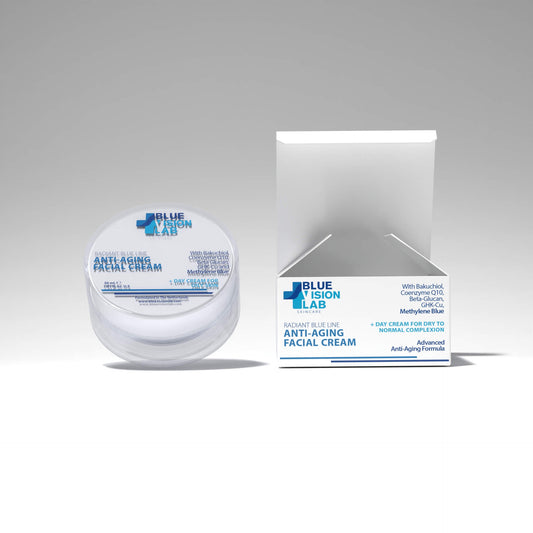
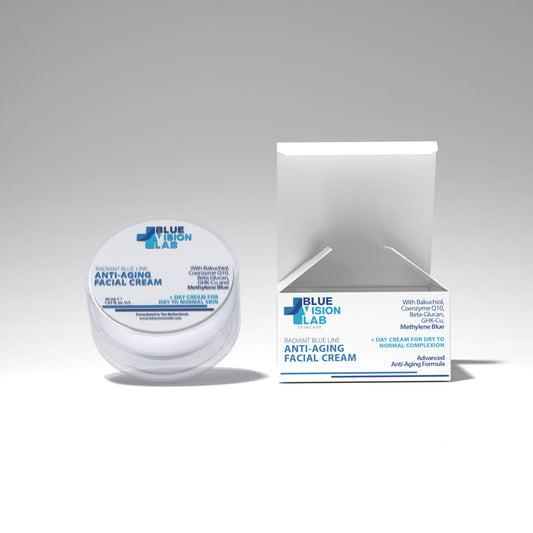
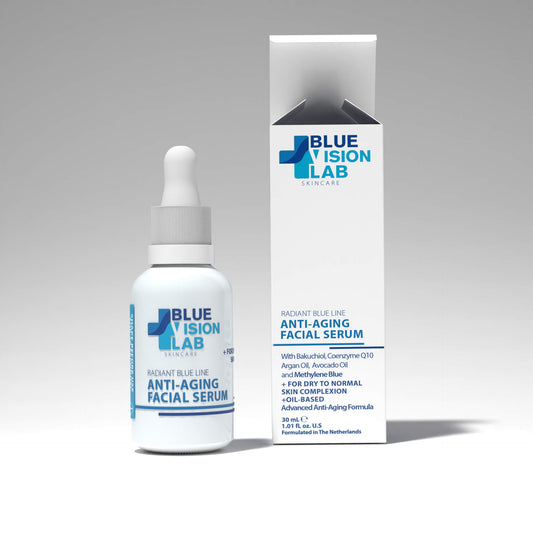
Blue Vision Lab's advanced skin renewal serum combines bakuchiol and retinol at optimised concentrations for the European skin environment. Explore the range for intelligent, barrier-respecting skin solutions.