Re-Engineering Your Sleep: The Science Behind Molecular Night Creams
Pol SitjasWhat Is a Molecular Night Cream — and Why Does Timing Matter?
A molecular night cream is not simply a heavier version of your daytime moisturiser. It is a formulation engineered around the skin's own circadian biology — delivering cell-signalling ingredients precisely when the skin's repair machinery is at peak activity, and the barrier is most receptive to absorption.
Timing in skincare is not a marketing concept: it is biology. The skin operates on a 24-hour circadian clock that governs when it defends, when it repairs, and when it renews. Understanding this clock is the difference between a night cream that maintains hydration and one that genuinely accelerates skin renewal at the molecular level.
How the Circadian Rhythm Affects Skin: Protection Mode vs Repair Mode
The Day Shift: Protection Mode
During daylight hours, the skin is in active defence. Driven by the hormone cortisol (which peaks in the morning) and the external pressure of UV radiation, pollution, and oxidative stress, the skin's circadian clock directs resources toward:
- Sebum production and barrier reinforcement to resist environmental damage
- Antioxidant defence — vitamin C and glutathione activity peaks in the morning
- DNA damage sensing — p53 tumour suppressor proteins are most active in the early afternoon
- Reduced permeability — the skin barrier is tightest during the day, limiting both damage and absorption
This is why the answer to "how circadian rhythm affects skin" in a daytime context is fundamentally defensive: the skin prioritises survival over renewal.
The Night Shift: Repair Mode
From approximately 11pm to 4am, the skin shifts into peak repair mode — the biological window that determines how effectively your night cream and skin renewal routine actually works. Driven by melatonin release and a drop in cortisol, the skin's nocturnal activities include:
- Peak cell division — keratinocyte and fibroblast mitosis is highest between midnight and 2am; new skin cells are produced at roughly twice the daytime rate
- Increased blood flow to the dermis — nutrient and oxygen delivery to fibroblasts is enhanced, supporting collagen and elastin synthesis
- Elevated growth hormone secretion — GH pulses during deep sleep stimulate tissue repair and ECM remodelling
- Maximum barrier permeability — trans-epidermal water loss (TEWL) increases at night, but so does ingredient penetration depth
- DNA repair enzyme activity — photolesions from daytime UV exposure are corrected by nucleotide excision repair (NER) during sleep
The implication for skincare is clear: active ingredients applied during this window reach deeper, work on more metabolically active cells, and produce results that daytime application of the same formula cannot replicate.
Why Peptides Work Best at Night
What Peptides Are and How They Signal
Peptides are short chains of amino acids that function as biological messengers in the skin. Different peptide sequences mimic or trigger different cellular signals — instructing fibroblasts to produce collagen, stimulating growth factor release, inhibiting muscle contraction that deepens expression lines, or activating wound-healing cascades that rebuild the extracellular matrix (ECM).
In a molecular night cream, peptides are not passive ingredients — they are cell-signalling compounds that communicate directly with the skin's repair machinery. The key word is "repair": peptides that target collagen synthesis, ECM remodelling, and cellular turnover work in concert with the skin's own nocturnal biology when applied at night.
The Three Most Important Peptides for Night Cream Formulations
Signal peptides (e.g. Matrixyl — palmitoyl pentapeptide-4) instruct fibroblasts to increase collagen I, III, and IV production. Applied during the midnight-to-2am peak mitosis window, signal peptides produce a stronger collagen synthesis response than the same concentration applied during the day.
Carrier peptides (e.g. copper tripeptide-1, GHK-Cu) transport trace minerals like copper directly into dermal tissue. Copper is an essential cofactor for lysyl oxidase, the enzyme responsible for cross-linking collagen and elastin fibres into structurally stable networks. Copper tripeptide benefits at night therefore extend beyond surface renewal to the structural quality of the collagen being produced.
Neurotransmitter-inhibiting peptides (e.g. Argireline — acetyl hexapeptide-3) reduce the depth of dynamic wrinkles by partially inhibiting acetylcholine release at the neuromuscular junction. At night, when the face is at rest and muscles are not contracting, these peptides act on a relaxed tissue environment — their efficacy is structurally higher when the skin is not actively moving.
Copper Tripeptide Benefits at Night: Why GHK-Cu Is a Night Cream Essential
Copper tripeptide-1 (GHK-Cu) is one of the most well-researched peptides in skin biology. GHK-Cu is a naturally occurring copper complex found in human plasma, saliva, and urine that signals tissue repair — it is released in significant quantities after injury to trigger regeneration of skin, connective tissue, and blood vessels.
In topical formulations, copper tripeptide-1 delivers several overlapping benefits specifically amplified by nocturnal application:
- Collagen and elastin stimulation — GHK-Cu upregulates the production of collagen I, III, and VI, as well as elastin and proteoglycans
- Antioxidant enzyme induction — GHK-Cu activates superoxide dismutase (SOD) and catalase — the skin's endogenous antioxidant enzymes
- Wound-healing cascade activation — GHK-Cu triggers the same biological signals as minor skin injury, prompting fibroblast migration and proliferation without actual damage
- Reduction of cellular senescence — GHK-Cu has been shown to reverse some gene expression patterns associated with aging in skin fibroblasts
The reason copper tripeptide benefits at night are particularly pronounced is timing: GHK-Cu's wound-healing signals amplify the skin's own peak repair cycle rather than working against daytime barrier defence. In a well-formulated best cellular repair night cream, copper tripeptide is the ingredient that bridges the gap between surface skin renewal and deep dermal repair.
How to Build a Deep Anti-Aging Night Routine Around Molecular Night Creams
The goal of a deep anti-aging night routine is not to apply more products — it is to apply the right ingredients in the right sequence during the right biological window. Every step should either prepare the skin to receive actives or directly support the nocturnal repair cascade.
Step 1 — Double Cleanse (Remove the Day Shift's Work)
The skin's daytime barrier function is remarkable precisely because it is impermeable. That impermeability — sebum, oxidised lipids, pollution particles, sunscreen residue — must be fully removed before any night cream can reach the dermis.
A first cleanse with an oil or balm removes lipid-soluble debris (SPF, sebum, pollution). A second cleanse with a gentle water-based formula clears water-soluble residue and resets the skin's pH to the 4.5–5.5 range optimal for enzyme activity and ingredient absorption.
Step 2 — Apply a Peptide Serum Immediately After Cleansing
Apply your peptide serum while the skin is still slightly damp — this improves penetration depth by capitalising on the temporary increase in barrier permeability immediately after cleansing. The peptides applied here begin signalling fibroblasts and keratinocytes as the skin transitions into repair mode.
For the best cellular repair outcomes, look for serums combining signal peptides (Matrixyl, Argireline) with copper tripeptide-1 — ideally at a pH of 5.0–6.5 where these peptides are most stable and bioavailable.
Step 3 — Apply Targeted Actives (If Using Retinol or AHAs)
If your deep anti-aging night routine includes retinol or chemical exfoliants, apply them as a second active layer after your peptide serum. Night is the only appropriate time for retinol (photosensitive and UV-degraded), and AHA activity is enhanced in the skin's nocturnal enzyme environment.
Key point: retinol and peptides work through entirely separate mechanisms and do not compete — retinol via nuclear receptor activation, peptides via cell-surface receptor signalling. Used together in the same night routine, they address collagen production through dual independent pathways.
Step 4 — Apply Your Molecular Night Cream
This is the step that seals in the signals your peptide serum initiated and adds its own layer of skin renewal chemistry. A well-formulated night cream for deep anti-aging should contain:
- Copper tripeptide-1 (GHK-Cu) — for dermal repair and collagen cross-linking support
- Signal peptides — Matrixyl or similar for sustained collagen synthesis stimulation throughout the night
- Ceramides and fatty acids — to restore the lipid barrier and reduce TEWL during the night's elevated permeability window
- Niacinamide — supports ceramide synthesis, reduces inflammatory signalling, and improves the skin's natural repair enzyme activity
- Hyaluronic acid (multiple molecular weights) — sustained hydration at both epidermal and dermal levels
Apply generously. The night is the only time the skin can absorb and use a rich, lipid-heavy formulation without the interference of UV exposure, pollution, or makeup layered on top.
Step 5 — Optional: Occlusive Layer for Barrier-Compromised Skin
For those with dry, mature, or compromised skin, a thin layer of an occlusive product (petrolatum, lanolin, or a plant-based wax) applied over the night cream creates a moisture-seal that prevents the nocturnal TEWL spike from drawing moisture out before the skin's repair cycle can complete. This technique is particularly effective for maximising the benefit of the peptides and active ingredients applied beneath.
The Circadian Rhythm and Skin: What Disrupted Sleep Does to Your Skin Renewal
Understanding how circadian rhythm affects skin renewal also means understanding what happens when that rhythm is disrupted. Poor sleep quality — whether from late nights, shift work, chronic stress, or fragmented sleep cycles — has measurable consequences:
- Reduced growth hormone secretion — GH is released primarily in the first 90 minutes of deep sleep; poor sleep quality truncates this pulse and reduces ECM remodelling
- Elevated cortisol — Chronically elevated cortisol activates MMPs (the collagen-degrading enzymes), accelerating ECM breakdown
- Impaired DNA repair — Disrupted circadian clocks reduce nucleotide excision repair (NER) activity, allowing UV-induced photolesions to accumulate
- Increased inflammatory cytokines — Sleep deprivation elevates IL-1β, IL-6, and TNF-α — the same inflammatory signals responsible for collagen degradation and barrier compromise
Key insight: A molecular night cream applied during 5 hours of fragmented sleep delivers meaningfully less benefit than the same cream applied during 7–8 hours of consolidated sleep. Sleep quality is the irreplaceable foundation of any deep anti-aging night routine.
The Best Cellular Repair Night Cream: What to Look For on the Label
Not all night creams are molecular. When evaluating the best cellular repair night cream, the label should include:
Must-have actives (the signal layer)
- Palmitoyl pentapeptide-4 (Matrixyl) or palmitoyl tripeptide-1/7
- Copper tripeptide-1 (GHK-Cu) or copper peptide complex
- Acetyl hexapeptide-3 (Argireline) for dynamic line reduction
Must-have support ingredients (the barrier layer)
- Ceramide NP, AP, EOP — lipid barrier restoration
- Niacinamide (3%–5%) — ceramide synthesis and anti-inflammatory support
- Sodium hyaluronate (multiple molecular weights) — sustained dermal hydration
Red flags (non-molecular formulations)
- Fragrance or parfum — inflammatory irritant with no repair function
- High-concentration alcohol — barrier-disrupting, counterproductive at night
- No peptides, growth factors, or cell-signalling ingredients on the INCI list
The order of ingredients on the INCI list matters. Signal peptides should appear before the 1% threshold (typically before the preservatives) to indicate a therapeutically active concentration.
Night Cream for the Dutch Self-Care Market: Why Molecular Skincare Resonates
The Dutch wellness and self-care boom has driven a measurable shift in skincare purchasing behaviour — from impulse product buying to intentional routine building. Dutch consumers increasingly research the why behind their skincare choices, not just the what, making the science-led positioning of molecular night creams particularly well-aligned with this market's values.
For the skin renewal seeker in the Netherlands specifically, a deep anti-aging night routine built around peptides and cellular repair night cream fits naturally into the country's broader wellness culture — sleep optimisation, circadian health, and evidence-based self-care are themes that resonate strongly with the Dutch consumer mindset.
Night cream is no longer a passive step before bed. In a molecular formulation context, it is the most scientifically sophisticated moment in the entire skincare day.
Frequently Asked Questions
What makes a night cream different from a day cream?
A night cream differs from a day cream in its formulation goal, not just its texture. Day creams prioritise SPF protection, antioxidant defence, and barrier reinforcement against environmental stressors. Night creams — specifically molecular formulations — contain cell-signalling ingredients like peptides, copper tripeptide, and growth factors that work in concert with the skin's nocturnal repair cycle.
When is the best time to apply a molecular night cream?
Apply your night cream as part of a cleanse-serum-cream sequence beginning no later than 10–11pm, to align with the skin's transition into peak repair mode. The most active biological window — peak cell division, growth hormone secretion, and enhanced ingredient penetration — runs from approximately 11pm to 4am.
How does circadian rhythm affect skin renewal?
The circadian rhythm governs the skin's daily cycle between protection mode (daytime — barrier reinforcement, antioxidant defence, reduced permeability) and repair mode (night — peak cell division, collagen synthesis, DNA repair, maximum ingredient penetration). Disrupting this cycle through poor sleep reduces the effectiveness of every night cream and skin renewal treatment applied, regardless of formulation quality.
What are the benefits of copper tripeptide in a night cream?
Copper tripeptide-1 (GHK-Cu) in a night cream stimulates collagen I, III, and VI production; activates endogenous antioxidant enzymes (SOD, catalase); triggers wound-healing signals that drive fibroblast proliferation; and reduces markers of cellular senescence in the dermis. Its benefits are specifically amplified at night because it operates in concert with the skin's own elevated repair activity.
Can I use peptides and retinol in the same night routine?
Yes — and using both together is advisable for a comprehensive deep anti-aging night routine. Peptides and retinol work through completely separate mechanisms (cell-surface receptor signalling vs nuclear receptor activation) and do not compete. Apply the peptide serum first, then retinol, then your molecular night cream.
--
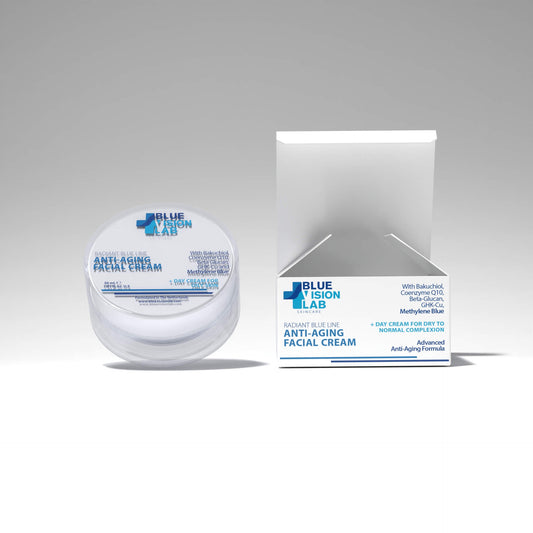
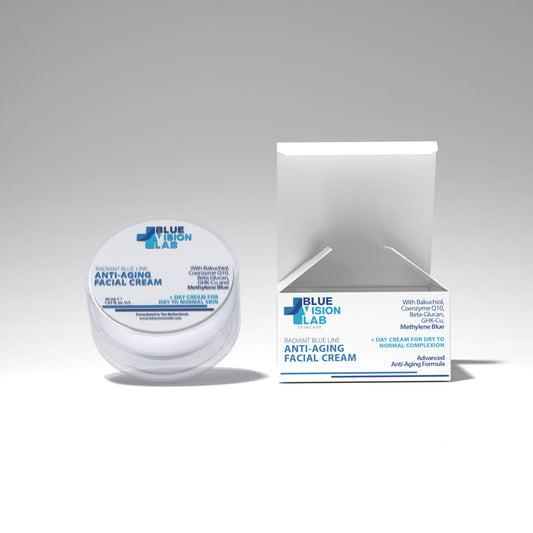
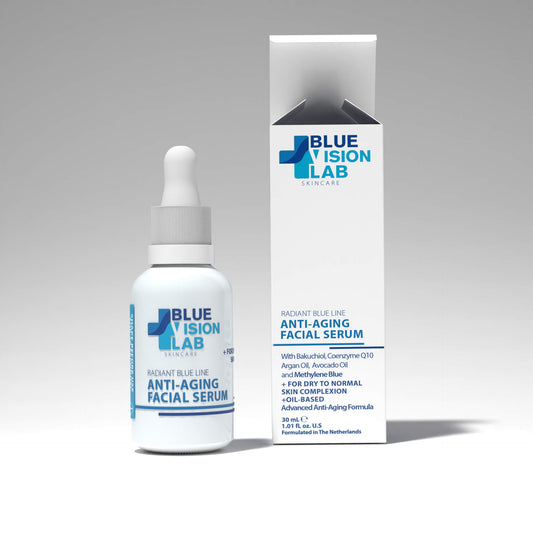
Blue Vision Lab's molecular night cream formulation is engineered around the skin's circadian repair biology — combining copper tripeptide-1, signal peptides, and barrier-restoring ceramides for advanced skin renewal during sleep.