How to Treat Deep Wrinkles on Exceptionally Dry Skin
Pol SitjasWhy Dry Skin Makes Wrinkles Deeper — and Harder to Treat
Deep wrinkles on dry skin are not simply a cosmetic issue; they are a sign of a compromised skin barrier struggling to retain the moisture that keeps tissue plump and resilient. When the skin's natural lipid barrier breaks down, trans-epidermal water loss (TEWL) accelerates — and every millilitre of water that escapes the dermis makes existing wrinkles appear deeper, more defined, and harder to smooth.
If you have noticed that your fine lines look dramatically worse by the end of the day, or that even rich creams seem to sit on top of your skin without ever truly absorbing, this guide is for you. Treating deep wrinkles on exceptionally dry skin requires a different approach than standard anti-aging: one that prioritises barrier restoration before anything else, because no cream for wrinkled skin can work properly on skin that cannot hold water.
Understanding the Dry Skin–Wrinkle Connection
How a Compromised Barrier Accelerates Wrinkle Depth
A healthy skin barrier is composed of ceramides, fatty acids, and cholesterol — the "mortar" between skin cells that locks moisture in and keeps irritants out. When this barrier is depleted, which happens naturally with age and is accelerated by cold climates, harsh cleansers, and low humidity environments, the skin loses its ability to maintain adequate hydration levels in the dermis.
This matters for deep wrinkles because skin volume is largely driven by water content. Dehydrated fibroblasts — the cells responsible for producing collagen and elastin — slow their output significantly. Without proper hydration, the extracellular matrix (ECM) becomes stiff and fragile, and wrinkles that were once superficial become etched progressively deeper into the skin. For anyone managing mature dry skin solutions, addressing TEWL is not optional — it is the foundation.
Why Standard Anti-Wrinkle Creams Often Disappoint on Dry Skin
Most anti-wrinkle creams are formulated for normal-to-combination skin profiles. They contain active ingredients — retinoids, peptides, AHA exfoliants — that work well when the skin barrier is intact, but can be drying, irritating, or simply ineffective on exceptionally dry skin where the barrier is already compromised.
An anti-wrinkle cream for dry skin needs to do two things simultaneously: deliver active anti-aging compounds and support the lipid barrier that allows those compounds to penetrate and function. Without this dual action, even the most scientifically advanced formula will underperform on dry, mature skin.
What Exceptionally Dry Skin Actually Needs
The Three Pillars of Deep Wrinkle Treatment for Dry Skin
Effectively treating deep wrinkles on dry skin requires addressing three interconnected needs:
- Intense hydration — Drawing and retaining water within the skin's layers using humectants like hyaluronic acid, glycerin, and urea
- Barrier repair — Rebuilding the lipid matrix with ceramides, fatty acids, and cholesterol to stop trans-epidermal water loss
-
Cellular renewal — Stimulating fibroblast activity and collagen synthesis to address wrinkle depth at the structural level
Each pillar supports the others. Hydration without barrier repair evaporates. Barrier repair without cellular renewal seals in moisture but doesn't reverse the structural changes that make wrinkles deep. A well-formulated cream for wrinkled skin on dry skin addresses all three.
The Role of Hyaluronic Acid for Flaky, Mature Skin
Hyaluronic acid (HA) is a naturally occurring glycosaminoglycan that can hold up to 1,000 times its weight in water — making it the most powerful humectant available in skincare. For flaky, mature skin, hyaluronic acid for dry skin works by drawing water from deeper skin layers and the surrounding atmosphere into the epidermis, plumping the appearance of deep wrinkles almost immediately.
However, there is an important nuance for mature dry skin: hyaluronic acid should always be followed by an occlusive or emollient layer — your best intense hydration cream for wrinkles — to seal the drawn moisture in. Applied to very dry skin without a subsequent moisturiser, HA can actually draw moisture out of the dermis, worsening dryness. The sequence matters as much as the ingredient.
Step-by-Step Hydration and Repair Routine for Deep Wrinkles on Dry Skin
This routine is designed specifically for exceptionally dry, mature skin dealing with deep wrinkles. Every step builds on the last to create a complete mature dry skin solution that addresses both surface dehydration and structural wrinkle depth.
Step 1 — Cleanse Without Stripping (Morning & Evening)
The first rule of treating deep wrinkles on dry skin is to stop removing what little moisture and lipid barrier the skin still has. Choose a cream or oil-based cleanser that preserves the skin's natural pH (4.5–5.5) and does not foam aggressively.
Avoid: sulfate-based cleansers, micellar waters used without rinsing, and anything that leaves skin feeling tight. Tight skin after cleansing is not "clean" — it is stripped.
Step 2 — Apply Hyaluronic Acid on Damp Skin (Morning & Evening)
Immediately after cleansing, while skin is still slightly damp, apply hyaluronic acid for flaky mature skin. The residual moisture on the skin surface gives HA water to work with — maximising its plumping effect in the superficial layers where fine lines and texture live.
Use a serum containing multiple molecular weights of hyaluronic acid if possible: low-molecular-weight HA penetrates deeper into the dermis, while high-molecular-weight HA creates a film at the surface that reduces TEWL.
Step 3 — Apply Your Active Anti-Wrinkle Treatment (Evening)
This is the step where cellular renewal happens. For deep wrinkles on dry skin, the most effective active ingredients are:
- Peptides — Signal fibroblasts to increase collagen and elastin production without the irritation risk of retinoids on compromised skin
- Methylene Blue — Penetrates the mitochondrial membrane to restore ATP-driven fibroblast energy, enabling cellular renewal at the source
- Low-dose retinol (0.025%–0.05%) — Effective for collagen stimulation, but only once the barrier is sufficiently restored; always layer over a hydrating serum
Apply actives in the evening when skin is in repair mode and not competing with UV exposure or environmental stressors.
Step 4 — Seal with the Best Intense Hydration Cream for Wrinkles (Morning & Evening)
This is the most important step for exceptionally dry skin and the one most people underdo. An anti-wrinkle cream for dry skin should function as both a humectant-delivery vehicle and an occlusive barrier reinforcer — locking in the hyaluronic acid and actives applied beneath it.
Look for a cream for wrinkled skin on dry skin that contains:
- Ceramides (1, 3, 6-II) — To rebuild the lipid mortar of the skin barrier
- Shea butter or squalane — Rich emollients that mimic the skin's natural sebum
- Niacinamide — Supports ceramide synthesis and reduces TEWL without clogging pores
- Glycerin — A secondary humectant that works synergistically with hyaluronic acid
Apply generously. On very dry skin, more is more — a thin layer of even the best intense hydration cream for wrinkles will not be sufficient. Press the cream into the skin with warm palms rather than rubbing.
Step 5 — Morning SPF (Non-Negotiable)
UV radiation is the leading external cause of collagen degradation and deepened wrinkles. On dry skin, choose a mineral SPF 30–50 with a hydrating base (zinc oxide formulations are gentler and less drying than many chemical filters). Skipping SPF makes every active treatment you applied the night before significantly less effective.
Step 6 — Weekly Gentle Exfoliation (1–2x per week, Evening)
Flaky, dry skin creates a physical barrier between your anti-wrinkle cream and the dermis — preventing active ingredients from penetrating to where they need to work. A gentle exfoliation step removes built-up dead skin cells and dramatically improves absorption.
For mature dry skin solutions, choose:
- Lactic acid (5%–10%) — An AHA that also provides hydration as it exfoliates; ideal for dry skin
- Enzyme exfoliants (papain, bromelain) — Very gentle, no acid burn risk, suitable for sensitive mature skin
Always follow exfoliation with your full hydration and barrier routine (Steps 2–4), never before a barrier that is already compromised.
How to Plump Wrinkled Skin: What "Plumping" Actually Means
When skincare brands say a product will "plump" wrinkled skin, they are describing one of two distinct mechanisms — and understanding which one you need changes which products you choose.
Surface plumping happens immediately: hyaluronic acid and glycerin draw water into the epidermis, temporarily filling in fine lines from the inside. This is visible within minutes of application. It is real, but temporary.
Structural plumping is long-term: collagen and elastin synthesis by fibroblasts rebuilds the physical scaffolding of the dermis, reducing wrinkle depth permanently over weeks and months. This is what peptides, retinol, and mitochondrial actives like Methylene Blue drive — and it requires consistency over 4–12 weeks before becoming visible.
An effective mature dry skin solution targets both: immediate surface plumping for confidence today, and structural repair for visibly smoother skin over time.
Ingredients to Avoid on Exceptionally Dry, Wrinkled Skin
Not all anti-aging ingredients are appropriate for compromised dry skin. Avoid the following, at least until the barrier is restored:
- High-strength retinoids (>0.1%) — Can cause peeling and barrier damage that worsens dryness and wrinkle appearance
- Benzoyl peroxide — Highly drying; no place in a mature dry skin routine
- Alcohol-heavy toners — Destroys the lipid barrier rapidly
- Fragrance and essential oils — Common irritants that trigger inflammatory responses in compromised skin, accelerating collagen breakdown
- High-concentration AHAs (>15%) — Too aggressive on already compromised skin; stick to lactic acid at lower concentrations
Frequently Asked Questions
What is the best anti-wrinkle cream for dry skin?
The best anti-wrinkle cream for dry skin is one that combines humectants (hyaluronic acid, glycerin), barrier lipids (ceramides, shea butter, squalane), and collagen-stimulating actives (peptides, retinol) in a rich, emollient base. Look specifically for formulations that list ceramides and hyaluronic acid together — these address both the dehydration and structural repair needs of dry, wrinkled skin simultaneously.
How long does it take for a hydration routine to reduce deep wrinkles?
Surface plumping from hyaluronic acid and intense hydration creams is visible within hours of first application. Structural reduction of deep wrinkles — driven by collagen synthesis — takes 6–12 weeks of consistent routine use. Patience and consistency outperform any single product.
Can hyaluronic acid make dry skin worse?
It can, if used incorrectly. Hyaluronic acid for flaky mature skin must always be applied to damp skin and sealed with a cream or occlusive moisturiser. On dry skin in low-humidity environments, HA without a sealing layer can draw moisture from the dermis, temporarily worsening dryness. The fix is always to layer it under your best intense hydration cream for wrinkles.
Is a cream or serum better for deep wrinkles on dry skin?
For dry skin, both are essential — but they serve different roles. A serum delivers concentrated actives (hyaluronic acid, peptides) that penetrate deeply. A cream for wrinkled skin seals those actives in and repairs the lipid barrier. Using one without the other gives you half the benefit. The correct sequence is always serum first, cream second.
At what age should I start treating dry skin wrinkles?
A barrier-supportive, intensely hydrating routine is beneficial from the mid-20s onward as natural ceramide and lipid production begins to decline. For mature dry skin solutions targeting deep wrinkles specifically, the 40s and 50s are typically when a full repair-and-renew approach becomes most impactful — though starting earlier always reduces the depth wrinkles reach.
--
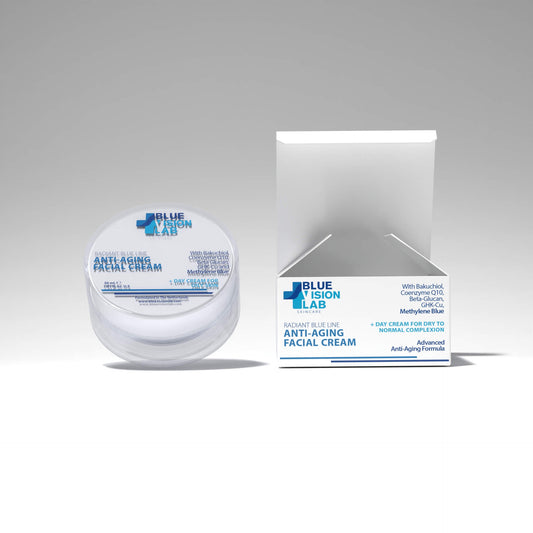
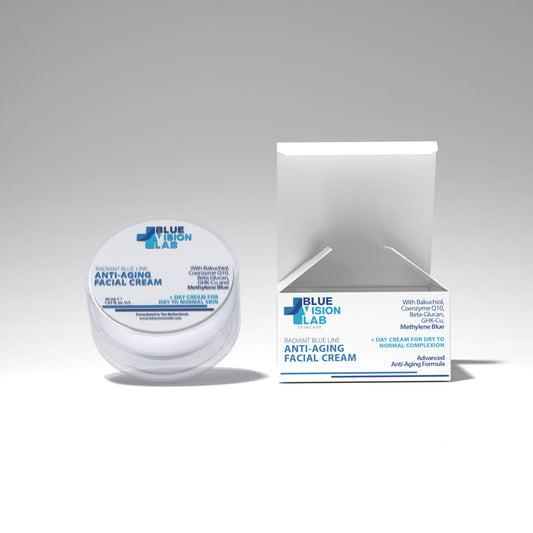
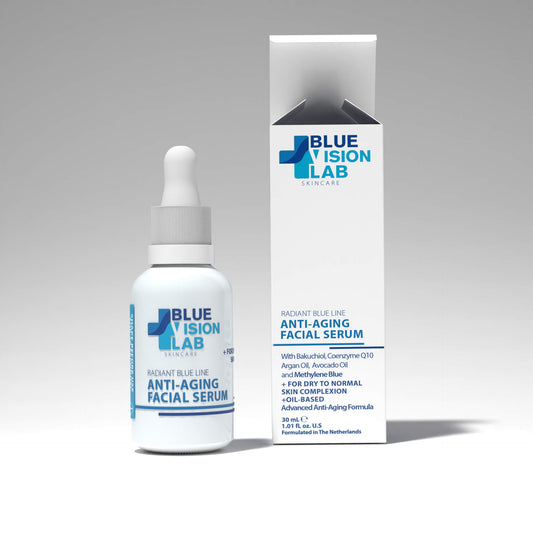
Blue Vision Lab formulations are developed for mature, dry, and compromised skin profiles. Explore the range of cream for wrinkled skin with hyaluronic acid, ceramides, and cellular actives.